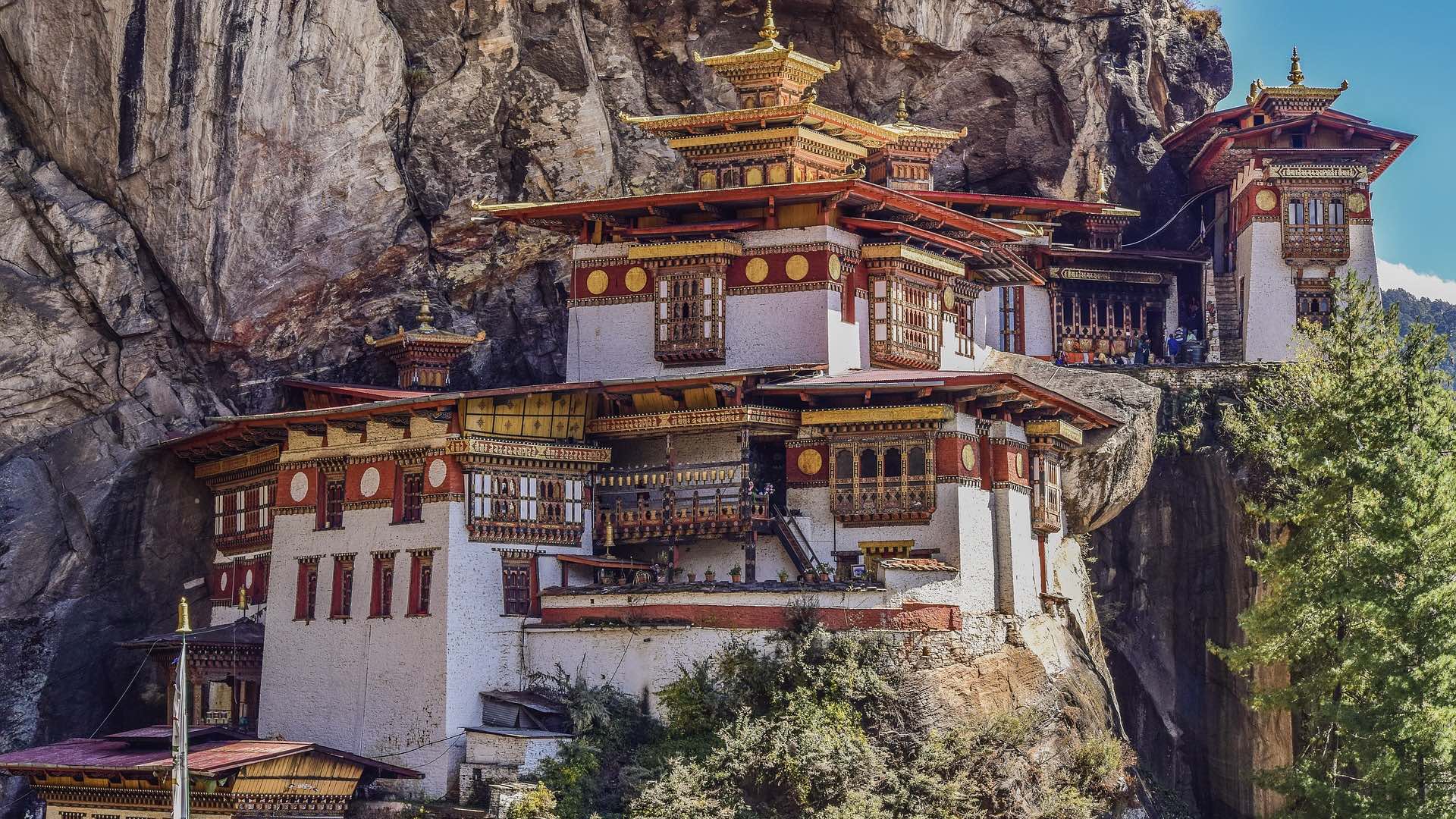
Bhutan travel cost 2026: how the SDF actually works.
Bhutan has a reputation as the world's most expensive stamp in your passport — and the reputation is only half true.
The short answer
Bhutan charges a Sustainable Development Fee of US$100 per person, per night, plus a one-time US$40 visa fee. The SDF covers none of your trip — no hotel, no meals, no guide, no transport. Add those and a comfortable mid-range trip runs US$250–350 per person per day, or roughly US$1,800–2,500 for a week, excluding international flights. Since 1 January 2026 a 5% GST also applies to tourism services, though not to the SDF or visa fee. The $100 rate is confirmed through 31 August 2027.
The Sustainable Development Fee scares off travelers who would happily pay the same money spread across a normal trip, simply because nobody explains clearly what the fee is, what it buys, and what the real total comes to.
We've been guiding travelers through the Himalayas for more than twenty years, and Bhutan is where our partner network runs deepest. So here's the honest math for 2026 — no mystery, no markup hidden in vague "package pricing."
The SDF, explained simply.
The Sustainable Development Fee is US$100 per person, per night, paid to the Royal Government of Bhutan — not to any tour operator. The current rate is a 50% reduction from the original $200 and is confirmed through August 31, 2027. On top of that sits a one-time $40 visa application fee.
What the SDF is not: it is not your hotel, your meals, your guide, or your transport. Those are separate, booked through your operator. What it is: Bhutan's deliberate choice to fund free healthcare and education, keep the country carbon-negative, and cap visitor numbers so the Tiger's Nest never looks like a theme park queue.
Discounts worth knowing: children aged 6–12 pay half; children 5 and under are exempt. The fee is charged in US dollars.
Regional nationals pay a different rate. Indian, Bangladeshi and Maldivian travellers pay a reduced SDF of INR 1,200 per person per night instead of the US$100. Worth stating plainly because it is widely muddled online: the SAARC exemption you may read about covers official and national business, not tourism, so leisure travellers from those countries do pay the regional rate.
New for 2026: since 1 January, a 5% Goods and Services Tax applies to tourism services — hotels, guides, and transport. It does not touch the SDF or the visa fee, and the ranges below already absorb it.
What a real trip costs
| Item | Typical 2026 cost |
|---|---|
| SDF | $100 pp/night |
| Visa fee | $40 one-time |
| Hotel (comfortable 3-star) | $60–120/night |
| Guide, driver, vehicle, meals | $80–150 pp/night |
| 5% GST on tourism services | Included in the ranges above |
| Realistic total | $250–350 pp/night |
Excludes international flights.
That lands a one-week Bhutan trip around $1,800–2,500 per person before flights — comparable to an African safari or a Galápagos cruise, and for a similar reason: you're paying for a place that has chosen not to be overrun.
You will see wildly different numbers elsewhere — anything from $250 to $2,000 a night. That spread is real, and it is almost entirely accommodation. The top end is Amankora, Six Senses and the like, where lodging alone can exceed $1,000 a night. The bottom is basic group travel on a fixed coach itinerary. Our range describes the middle: comfortable three-star hotels or farmhouse stays, a private guide and vehicle, and a route built around you rather than a bus schedule. If someone quotes you far below it, ask what the hotel is and how many people are in the van.
Want these numbers for your dates?
Ranges only get you so far. Tell us your dates, group size and how you want to travel, and we'll come back with an actual figure — itemised, with the SDF broken out, so you can see exactly what goes to the government and what goes to the trip.
You can't just show up.
Independent travel in the backpacker sense doesn't exist in Bhutan — every itinerary runs with a licensed Bhutanese guide, and your visa is approved only after your SDF is paid. In practice: choose your operator, agree an itinerary, pay SDF and visa fee in advance, and your visa arrives electronically before you fly. Flights enter via Paro — one of the most spectacular landings in the Himalaya.
This is where working with a team that knows Bhutan personally matters. Our family of operators and guides span Bhutan, and we build routes around what you actually want — trekking, festivals, farmhouse stays — rather than the standard minibus circuit.
A note on the "independent travel" headlines of the past year: it has been promoted online, but the infrastructure and policies aren't working yet. Most sites in the country still require a licensed guide simply to buy an entry ticket.
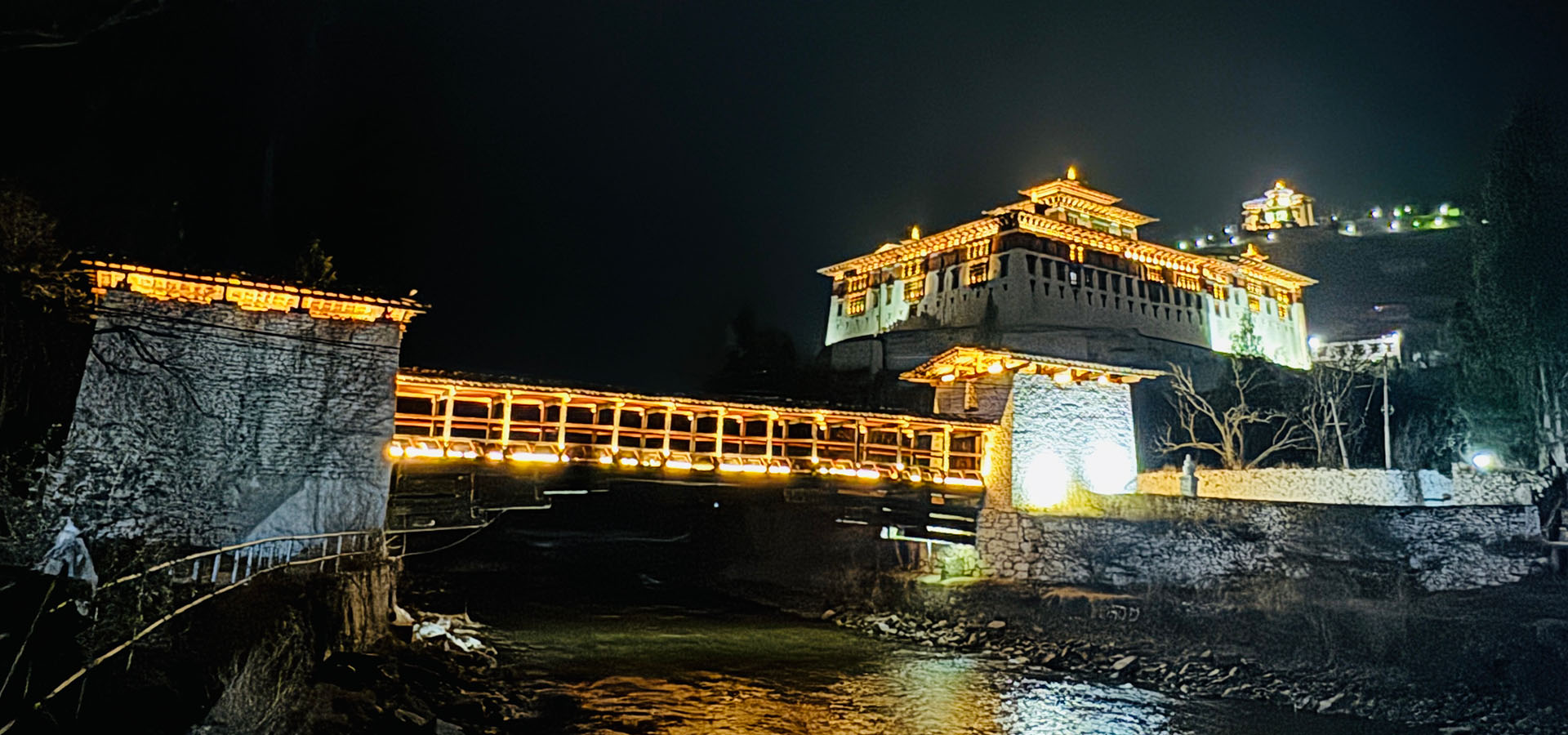
Our Bhutan short list.
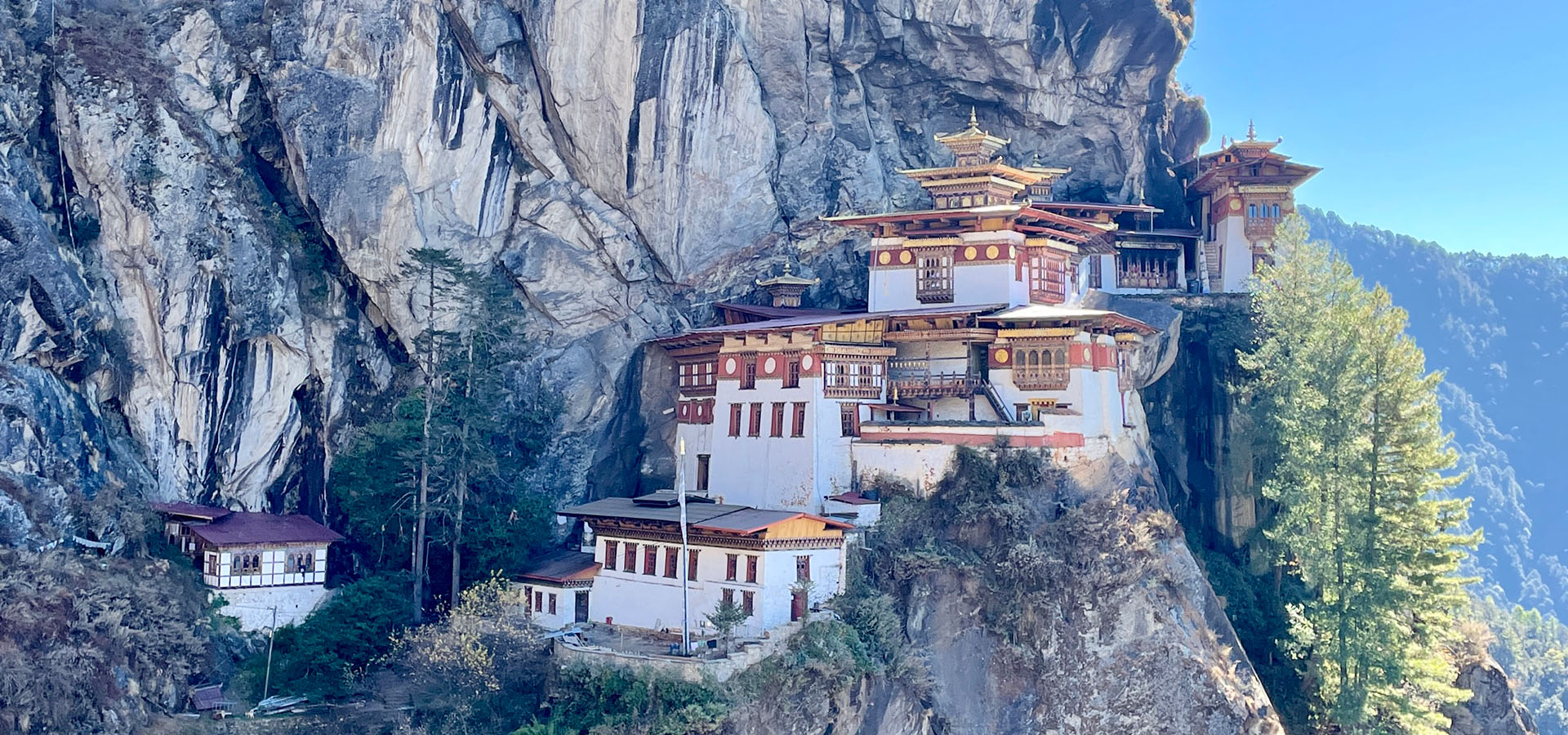
Paro & the Tiger's Nest
Everyone goes; everyone should. The hike to Taktsang Monastery, clinging to a 900 m (2,950 ft) cliff face, earns its fame. Go at dawn, before the day-trippers.
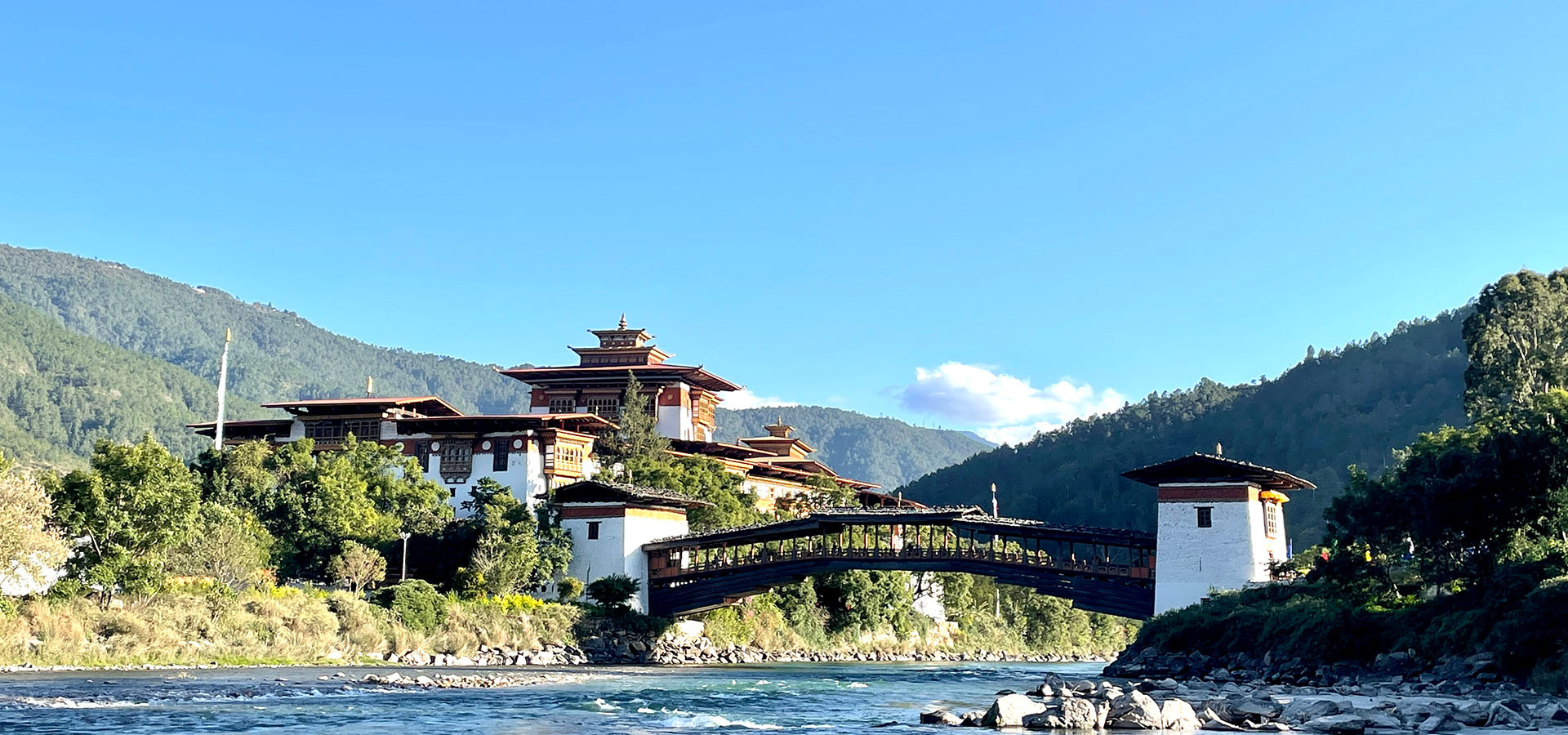
Thimphu & Punakha
The capital without traffic lights, then to Punakha's fortress-monastery at the meeting of two rivers — winter home of Bhutan's monastic body.
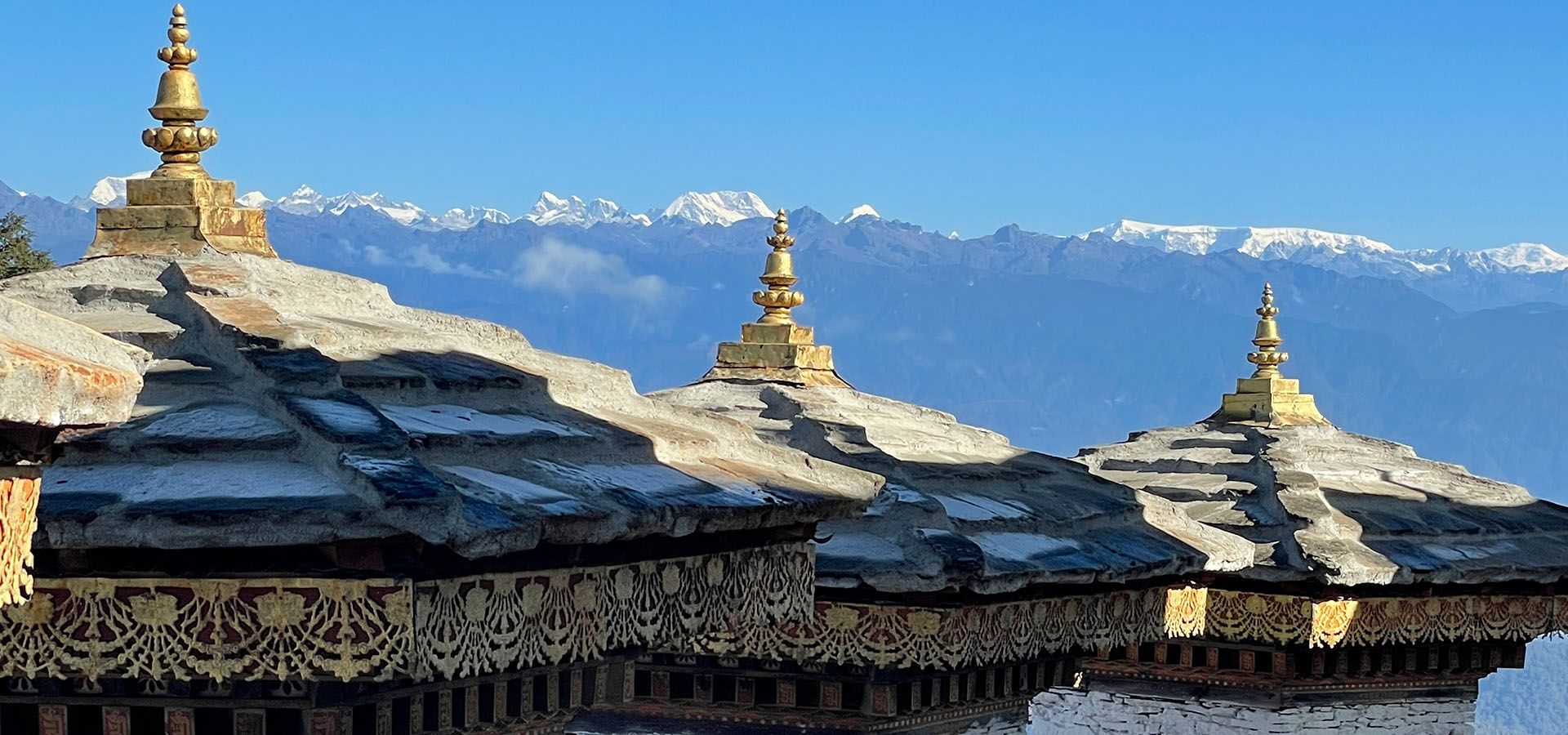
Over the Dochula Pass
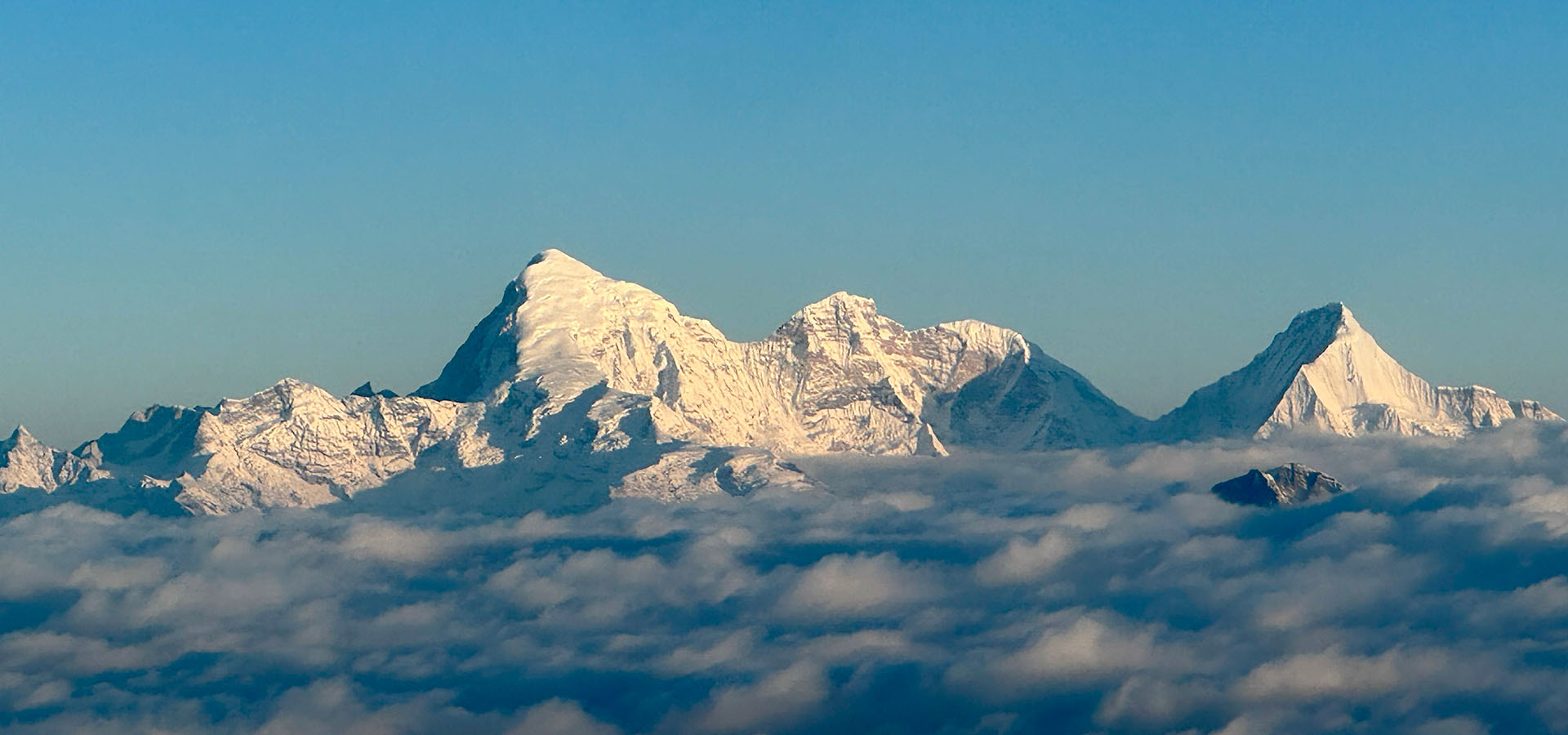
One hundred and eight chortens on a ridge, and on a clear morning the eastern Himalaya laid out behind them. It is the drive between Thimphu and Punakha, and not one you sleep through.
The emptiest trails in the Himalaya.
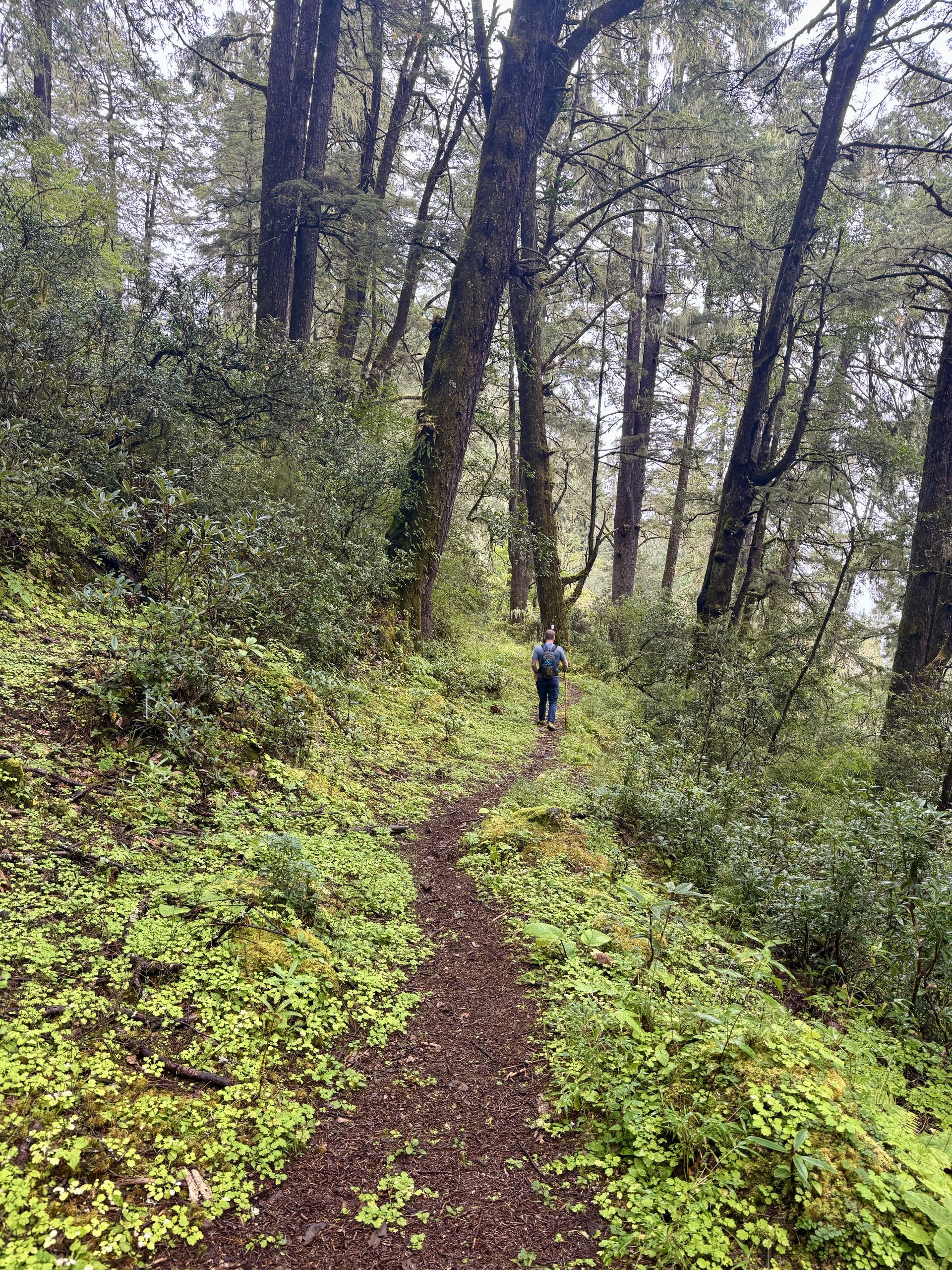
The Druk Path — 4–5 days, Paro to Thimphu over ridgeline lakes — suits most fitness levels. The Trans Bhutan Trail restoration means you can now walk sections of the historic route that once connected the whole kingdom. When in Khotokha, join the three valleys trek to connect to Gangtey.
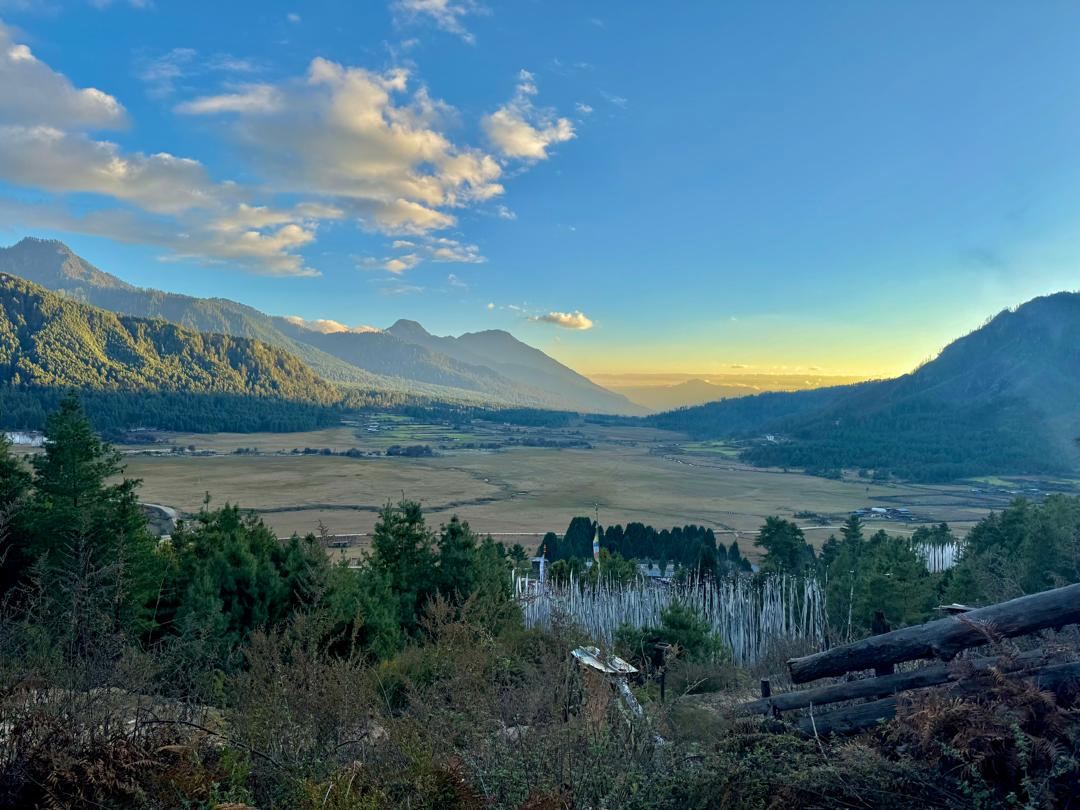
What the photograph does not show is anyone else on the trail. That is not luck or timing; it is what capping visitor numbers actually buys you.
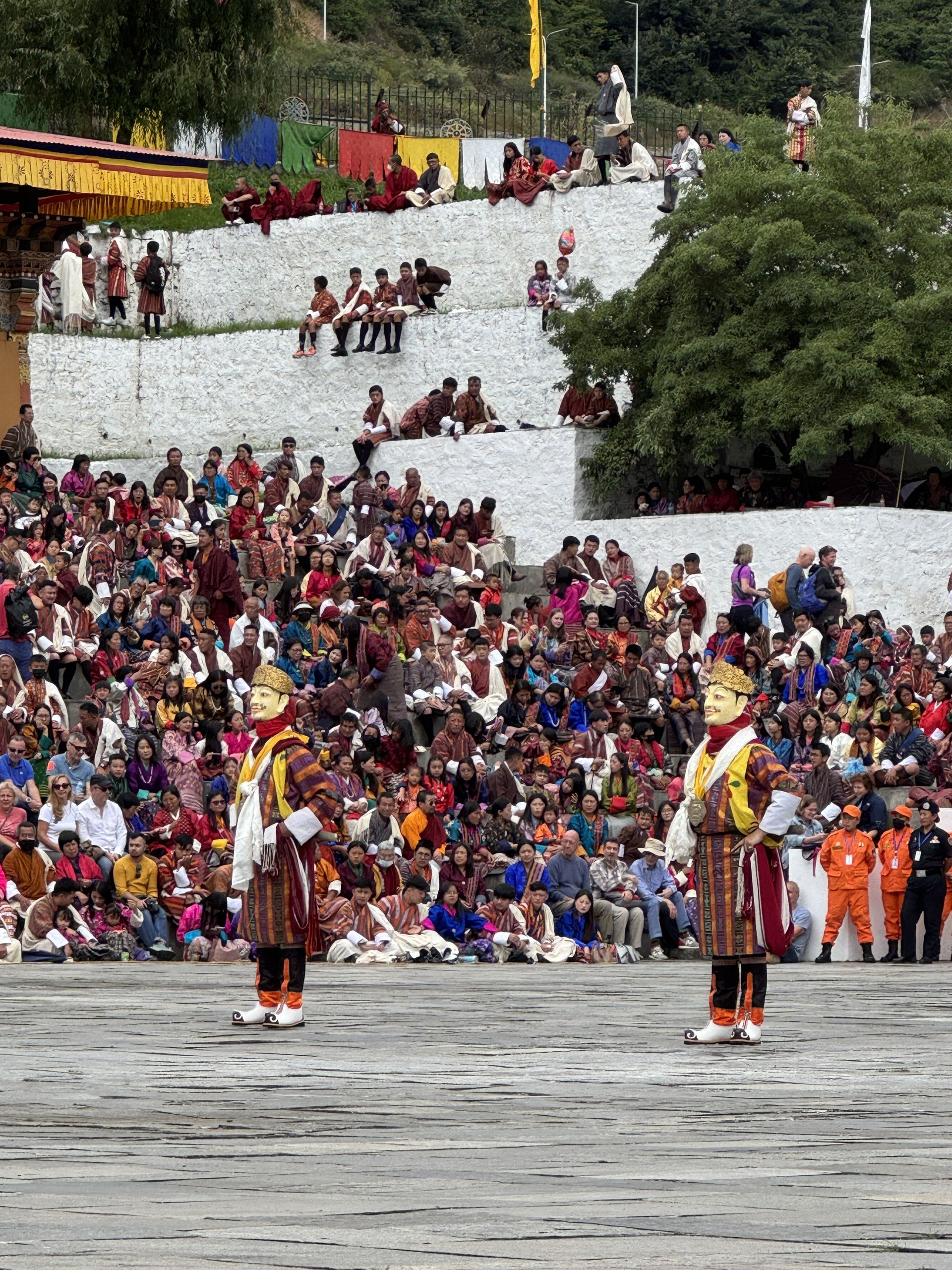
Tshechus.
Masked dances, whole valleys turned out in their finest kira and gho. Paro Tshechu (spring) and Thimphu Tshechu (autumn) are the big ones — book months ahead.
Festival dates move with the lunar calendar, which is the single most common reason a Bhutan itinerary gets built around the wrong week. Tell us which tshechu you want and we will fix the dates first and the rest of the route around them.
Khotokha.
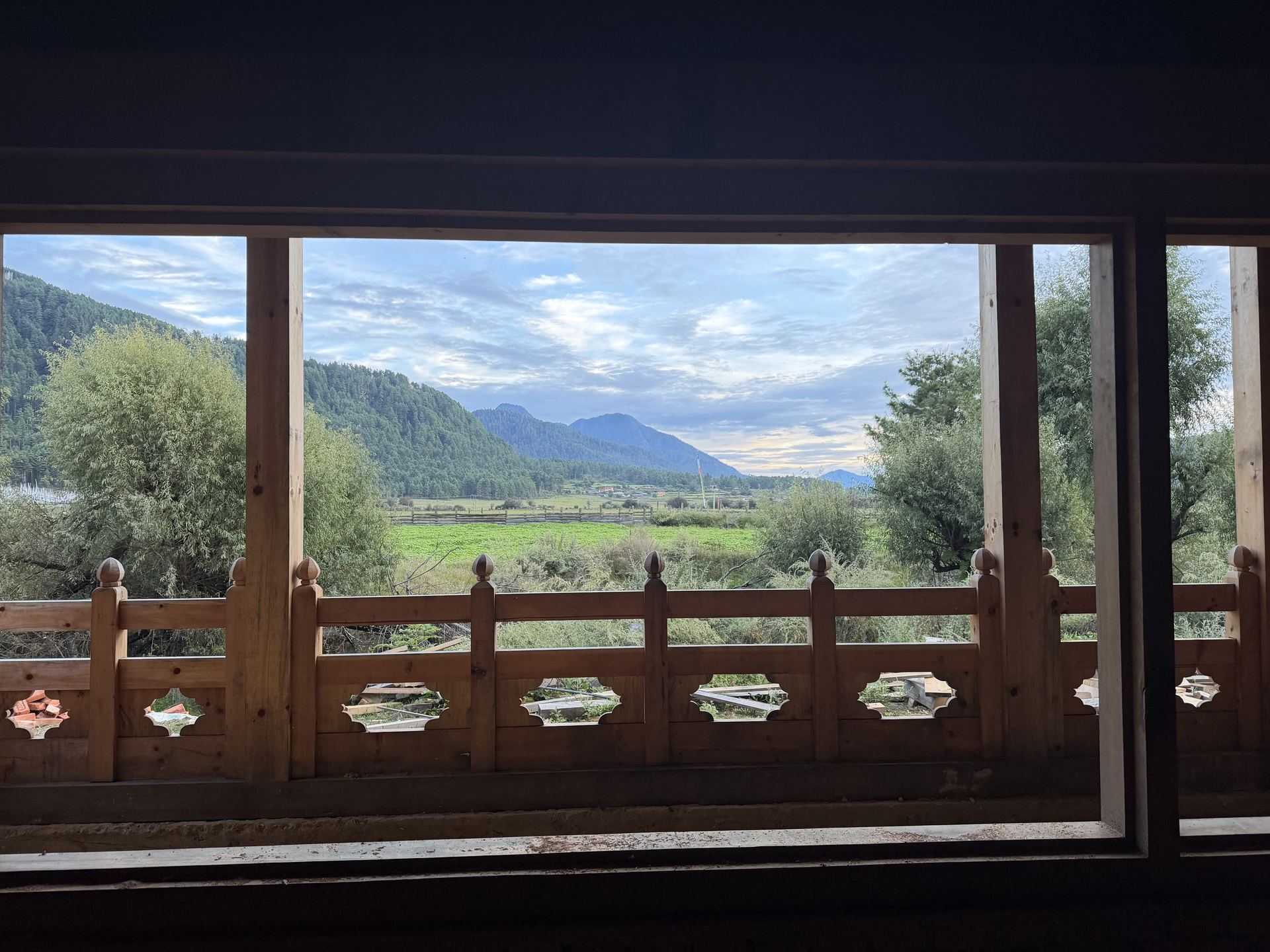
This is where our recommendations become unique. In 2027, one of our newest partnerships opens in Khotokha Valley — a lodge built using traditional rammed earth construction, making it one of the nation's most sustainable properties. A base for days of exploring on foot or by bicycle, and intentional rest when you return each afternoon.
When to go.
- March–May: rhododendrons in bloom, clear trekking weather, Paro Tshechu. Peak season for good reason.
- June–August: monsoon greenery, fewer visitors, lower hotel rates. Valley travel stays pleasant; high treks get wet.
- September–November: the classic window — crisp air, harvest gold in the valleys, Thimphu Tshechu, black-necked cranes arriving in Punakha and Phobjikha.
- December–February: cold, quiet, and clear. Best-value season; lower valleys are entirely travelable.
Is Bhutan worth the fee?
If your measure is cost-per-sight, maybe not. If it's cost-per-experience, few places on earth compete: you will share trails with yaks instead of crowds, eat in farmhouses instead of buffet halls, and see a Buddhist kingdom that runs on Gross National Happiness rather than gross national anything-else. The SDF is why it stays that way. We'd rather send you for fewer nights done well than talk you out of going.
The things people actually ask.
How much is Bhutan's SDF in 2026?
Does the SDF include hotels and meals?
Is there tax on top of the SDF?
How much is the SDF for Indian, Bangladeshi and Maldivian nationals?
Can I visit Bhutan without a tour operator?
What does a week in Bhutan realistically cost?
When is the best time to visit Bhutan?
Last reviewed: 29 July 2026 · SDF rate confirmed through 31 August 2027
Plan your trip.
Bhutan rewards travelers who come with intention — which, frankly, is the whole point of the fee. Talk to our team about a route built around your interests, and we'll give you the real numbers up front.
Comparing the Himalaya country by country? Bhutan's fee is the outlier — see what Nepal charges in trekking permits, or read how the eastern Tibetan Plateau needs no permit at all, or compare Ladakh's permit rules.
Permit and access rules change — we re-check them for our own departures. Subscribe to the Monthly Dispatch below to get the updates.